Enhancing Purpose-Built Spatial Data Infrastructure for Today’s Scale and Complexity

Contents
Introduction: Exploring Purpose-Built Spatial Data Infrastructures
Across the GEO-IT landscape, purpose-built spatial data infrastructures continue to power critical operations. They store, process, and serve data that entire organizations rely on daily, and in many cases, they do so extremely well.
But as the demands placed on spatial data evolve, so does the context in which these systems operate. Across industries, organizations now spend 60–80% of their IT budgets maintaining existing systems, while teams lose up to 17 hours a week per FTE on managing and supporting them.
At the same time, expectations have shifted. Modern workflows increasingly require real-time processing, integration with AI-driven analytics, and the ability to serve data across a growing number of applications and endpoints simultaneously.
As Rosalie puts it, “These systems were purpose-built at a particular point in time, designed around specific workflows, analytics demands, and tooling. In today’s landscape of growing data volumes, faster analysis needs, and evolving customer expectations, integrating complementary capabilities can extend the value of existing infrastructure and enable new scale, speed, and complexity.”
The opportunity today is not to rethink what works, but to extend it in a way that meets these new demands.
The Purpose of Purpose-Built Infrastructure
Purpose-built spatial data infrastructures were designed with a clear objective: to support defined workflows with reliability and precision.
That focus has been a strength. It enabled organizations to build stable, dependable systems tailored to their operational needs. But as those needs expanded, new requirements began to emerge alongside existing ones.
Today’s GEO-IT environments call for:
- Real-time data access across distributed systems
- Integration with advanced analytics and AI models
- Support for a broader ecosystem of applications and users
As Rosalie notes, “As the objectives of purpose-built systems broaden beyond the original scope, things get more complex.”
While purpose-built systems continue to deliver on their original objectives, the evolving market places more expectations on these systems in the form of analytical needs, technological trends, and a broader ecosystem of applications and users.
Why Change Feels Risky
When systems are deeply embedded in daily operations, any change carries weight. These infrastructures often support mission-critical processes, shaped over years of development, iteration, and integration. As a result, stability and continuity are non-negotiable.
“Older systems keep working as long as nobody is making any ill-advised and reckless changes that no one can remember how to fix.” said Rosalie.
This caution is a reflection of responsible system stewardship.
Over time, however, this also means that introducing new capabilities directly into existing environments can become increasingly challenging. Dependencies grow, documentation may be limited, and even small adjustments can have far-reaching (and unexpected) effects.
The challenge, then, is how to evolve without disrupting what already works.
Extending What Works: A Hybrid Approach
Rather than reworking existing infrastructure, many organizations are adopting a more incremental approach: extending their systems through an additional service layer. This model allows purpose-built infrastructure to continue supporting core workflows, while new capabilities are introduced alongside it.
By layering additional services on top, organizations can:
- Enable modern APIs and application access
- Support new data pipelines and analytics workflows
- Integrate with emerging technologies without disrupting core systems
“The goal is to connect existing systems with modern requirements efficiently,” said Rosalie.
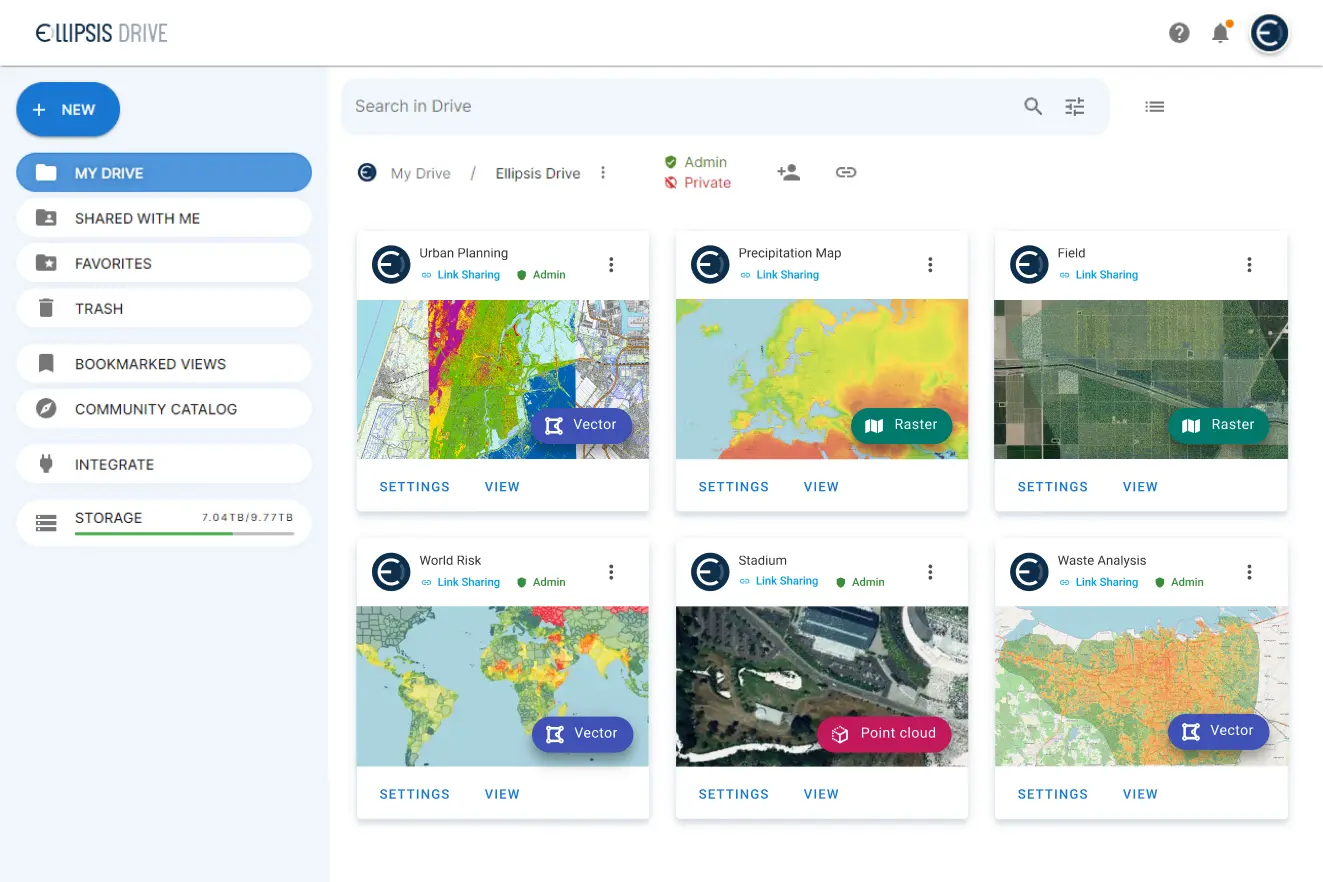
This is where Ellipsis Drive comes in. It acts as the complementary service layer. Deployed as a private instance within existing environments, it enables organizations to extend their spatial data infrastructure with capabilities such as interoperable data access, high performance web servicing and visualization, and seamless integration.
In this model, value is not created by replacing what exists, but by building on top of it. This unlocks new possibilities while preserving stability.
Conclusion: Building on What Already Works
Purpose-built spatial data infrastructures remain a critical foundation for GEO-IT operations. They reflect years of investment, expertise, and refinement, and continue to deliver value where it matters most.
The shift today is about expanding what it can support. By adopting a hybrid approach, organizations can introduce new capabilities without compromising stability, enabling both continuity and progress.
The future of spatial data infrastructure isn’t about replacing what works. It’s about building on top of it to meet modern needs and stay ahead of the curve.
Liked what you read?
Subscribe to our monthly newsletter to receive the latest blogs, news and updates.
Take the Ellipsis Drive tour
in less than 2 minutes'
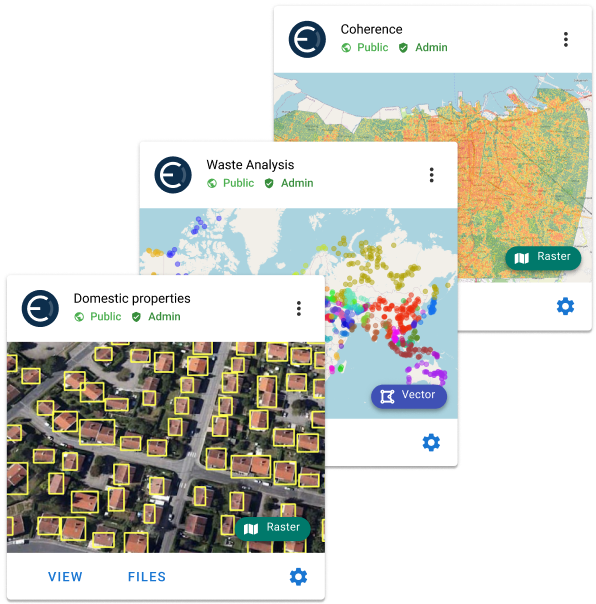
- A step-by-step guide on how to activate your geospatial data
- Become familiar with our user-friendly interface & design
- View your data integration options