AI
From Agentic AI to Operational Geospatial Workflows
Contents
Introduction: From AI Reasoning to AI Action
Agentic AI can reason, plan, and generate instructions. But reasoning alone doesn't produce an operational outcome. For geospatial workflows, the real challenge begins when an agent needs to act on its reasoning. It needs to find the right data, access it, perform the required analysis, and ultimately deliver the result into the systems where people work.
This creates the next question in the Agentic AI conversation: What does it take to turn an intelligent agent into an operational system?
The answer lies in connecting AI to the infrastructure that already powers geospatial workflows.
An Agent Can't Work With Data It Can't Reach
An AI agent can only work with the information it can discover and access.
Yet spatial data rarely exists in one place. Organizations work across cloud storage, enterprise repositories, commercial data providers, archives, and specialized platforms. So the challenge is to make that data accessible and understandable to an agent.
This requires infrastructure that can expose datasets through machine-readable interfaces, provide the relevant metadata, and allow agents to discover what is available without requiring every source to be manually integrated.
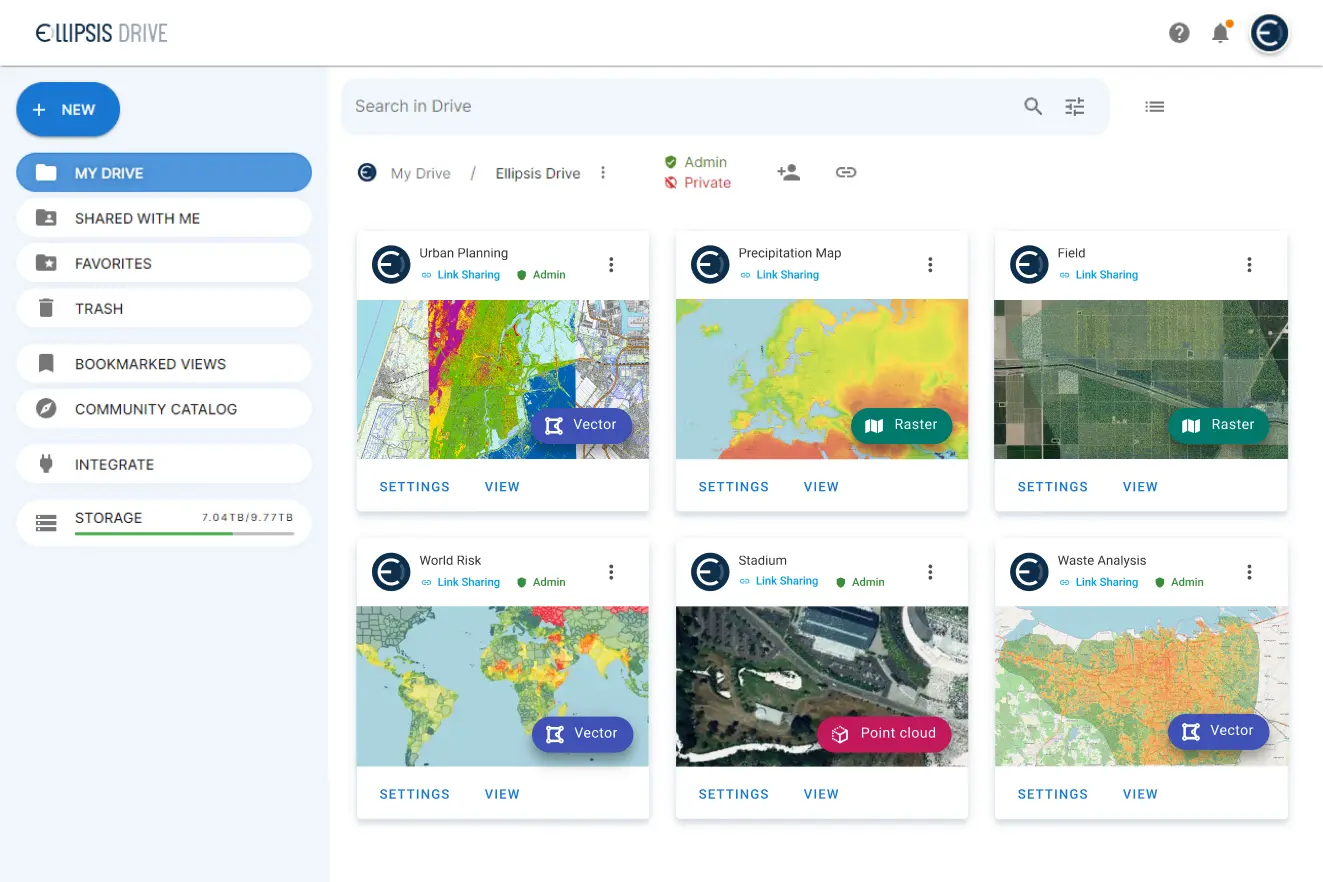
This is where Ellipsis Drive can act as a connection layer between Agentic AI and the wider spatial data ecosystem. Data can remain in its existing environment while being exposed to workflows through standardized interfaces and protocols.
The objective is to make the existing data ecosystem accessible to AI.
From Instructions to Execution
Finding the right data is only the beginning. An agent also needs to be able to do something with it. Consider a question such as: Which infrastructure assets are exposed to flooding?
An agent could determine which datasets are required, identify the relevant infrastructure assets, and establish the analytical steps needed to answer the question. It could even generate the Python code required to perform the analysis.
But the AI itself isn't the compute environment.
That is where Ellipsis Map Engine becomes relevant. Map Engine can execute Python code generated by the AI, allowing spatial computations to take place at scale without requiring the AI model to directly interact with the underlying hardware.
The division of responsibilities becomes clear:
AI provides the reasoning.
Ellipsis Drive provides access to the data.
Map Engine provides the compute.
The result is a workflow in which the agent can initiate the steps required to produce an actual result.
That is an important distinction. Agentic AI becomes significantly more useful when the gap between what an AI wants to do and what the infrastructure can execute starts to disappear.
Automation Needs Governance
Giving an AI agent the ability to access data and execute workflows introduces another requirement: control.
In an enterprise environment, organizations need to know what data an agent can access, which actions it is allowed to perform, and how those actions can be tracked. This makes capabilities such as identity management, granular permissions, auditability, and traceability increasingly important.
For example, access to a dataset can depend on the user, organization, geography, or other predefined conditions. The same principles that govern human access to spatial data can therefore become part of an automated workflow.
As Agentic AI moves from experimentation into operational environments, governance cannot remain an afterthought. The more an agent can do, the more important it becomes to define what it is allowed to do.
From Experiment to Operational Workflow
An operational Agentic AI workflow ultimately needs to connect several capabilities together:
Discover → Access → Reason → Compute → Validate → Deliver
Each step depends on the infrastructure underneath the agent.
Data needs to be discoverable. Access needs to be secure. Computation needs to be scalable. Results need to be traceable and delivered into existing workflows.
The next generation of geospatial workflows may therefore look very different from today's. Instead of manually navigating datasets, applications, processing tools, and APIs, users could increasingly define an outcome and allow an agent to orchestrate the steps required to achieve it.
But for that future to become operational, AI needs both intelligence, and the infrastructure capable of acting on it.
Liked what you read?
Subscribe to our monthly newsletter to receive the latest blogs, news and updates.
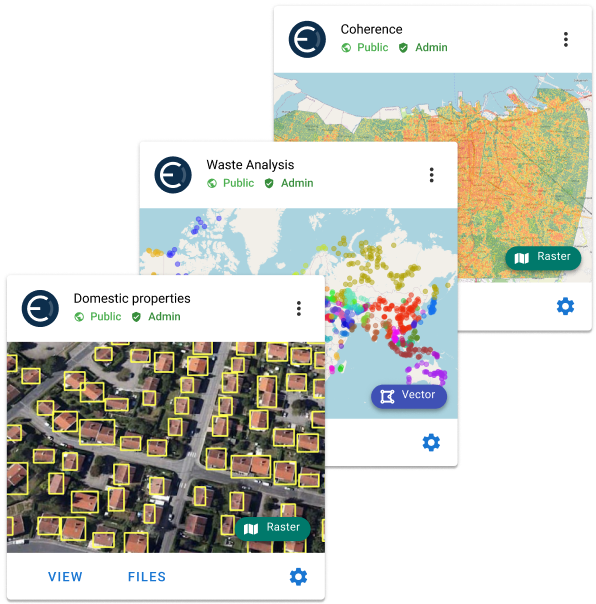
Take the Ellipsis Drive tour
in less than 2 minutes'
- A step-by-step guide on how to activate your geospatial data
- Become familiar with our user-friendly interface & design
- View your data integration options