Earth Observation
Infrastructure for a Multi-Cloud Environment
Contents
Introduction
In our previous pieces on data location and sovereignty in Earth Observation (EO) ecosystems, we explored a question that has always existed, but has grown in priority: where is your geospatial data actually hosted, and under whose jurisdiction does it operate?
The question itself is not new, but the context has changed. Data sources have diversified. Regulatory pressures have intensified, and customers increasingly expect data to reside within specific geographies or cloud environments. What's more, lock-in and dependencies need to be minimised. What was once an unassuming backend infrastructure choice is now a multi-faceted strategic consideration.
This new context introduces a new challenge. Data needs to be safeguarded whilst preventing both vendor lock-in as well as fragmentation, silos, and operational inefficiencies.
In an effort to meet all these needs, multi-cloud infrastructures have moved from trend to necessity.
What Multi-Cloud Really Means
When most people hear “multi-cloud,” they think of simply running workloads across AWS, Azure, and/or GCP. In reality, multi-cloud is far more nuanced, especially for spatial data ecosystems. It’s not merely a case of using multiple providers. Rather, it’s about structuring your infrastructure to leverage the strengths of each cloud without becoming dependent on any single one.
Working effectively in a multi-cloud environment requires discipline. Cloud providers naturally encourage lock-in, so a thoughtful architecture must emphasize compartmentalized workflows, and platform-agnostic tools. For spatial data, where datasets are large, distributed, and highly sensitive, this approach becomes critical: storage, compute, and analytics pipelines must all remain flexible enough to move or replicate as needed.
Building Multi-Cloud Infrastructure for Spatial Data
Working multi-cloud is not about introducing complexity for complexity’s sake. It’s a structural strategy that balances flexibility, performance, and control in a rapidly evolving geospatial landscape. The essentials include:
- Cloud-agnostic deployment: Compute and storage must run seamlessly across providers without rewriting pipelines.
- Standardized APIs and open stacks: Reduces vendor lock-in and allows integration across tools and teams.
- Separation of compute and storage: Ensures workloads scale independently and data remains portable.
- Identity and access portability: Maintains governance and security without constraining collaboration.
- Data flow compartmentalization: Safeguards sovereignty requirements while enabling authorized sharing.
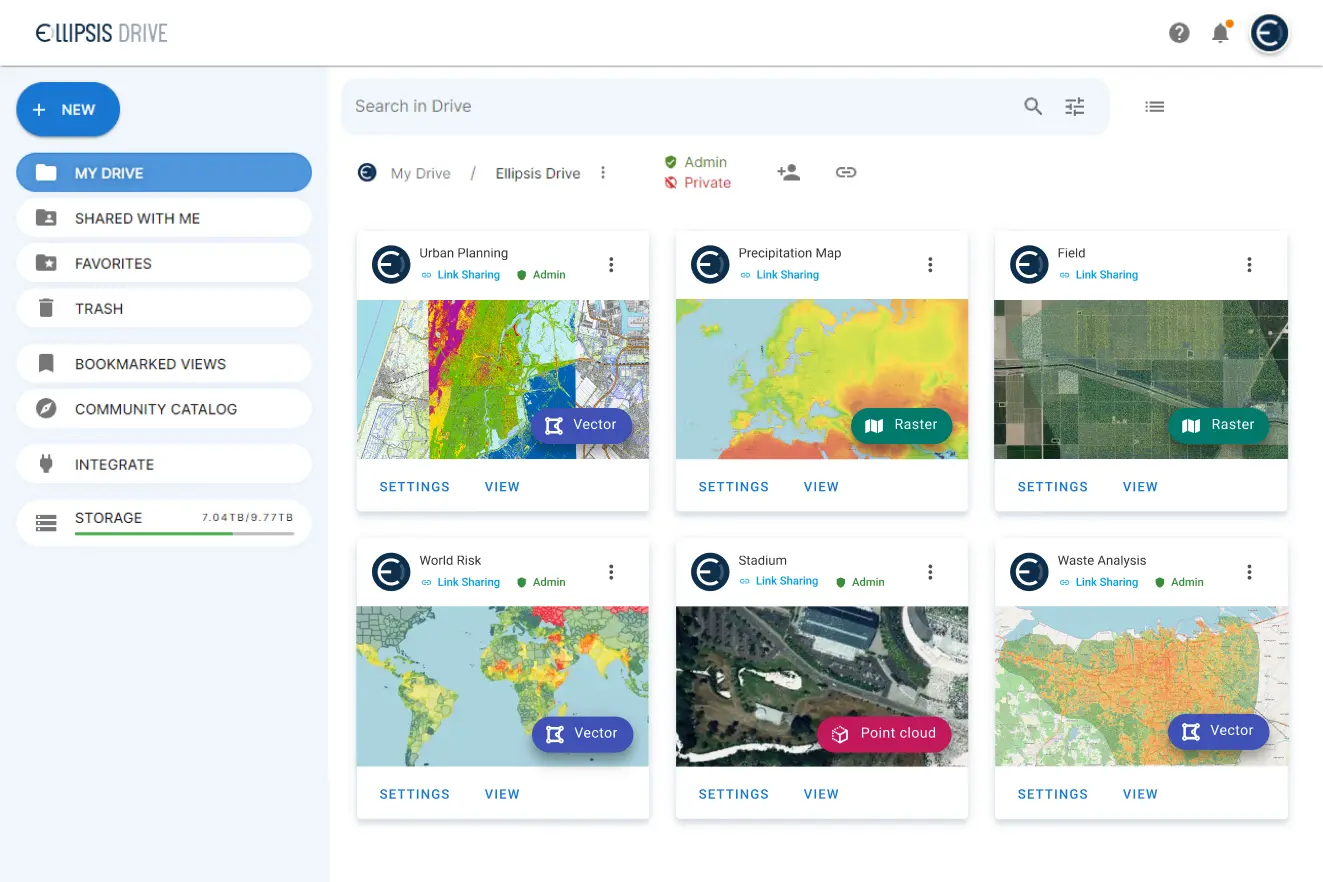
Achieving this requires careful design. This is where infrastructure solutions like Ellipsis Drive become a valuable ally because it complies with all the essentials that enable multi cloud working as listed above. It turns multi-cloud from a challenge into a strategic enabler, letting organizations focus on insights rather than infrastructure headaches. By supporting cloud-agnostic deployments and integration across environments, it helps teams navigate the complexity of multi-cloud without sacrificing agility or governance. Then decisions can be made about what you want to run where (which processes), or what you want to host where (which data), without needing to worry about how you're actually going to make that work.
Conclusion
Multi-cloud ecosystems have become a necessity. As data sovereignty, regulatory requirements, and global collaboration grow in importance, organizations need infrastructure that balances compliance with flexibility, allowing data to flow where it’s needed without creating silos.
By embracing portable workflows, open technologies, and cloud-agnostic infrastructure, teams can manage multi-cloud complexity effectively. Solutions such as Ellipsis Drive make it easier to navigate this landscape, enabling organizations to focus on deriving insights from their spatial data rather than wrestling with infrastructure. In today’s world, the ability to operate seamlessly across clouds is a strategic differentiator.
Liked what you read?
Subscribe to our monthly newsletter to receive the latest blogs, news and updates.
Take the Ellipsis Drive tour
in less than 2 minutes'
- A step-by-step guide on how to activate your geospatial data
- Become familiar with our user-friendly interface & design
- View your data integration options
Related Articles
Building a Sovereign Earth Observation Infrastructure in Europe
In recent years, Europe’s conversation around data sovereignty has evolved. The point of discussion is not just about where information is hosted, but rather about which jurisdictions govern the enti
5 min read
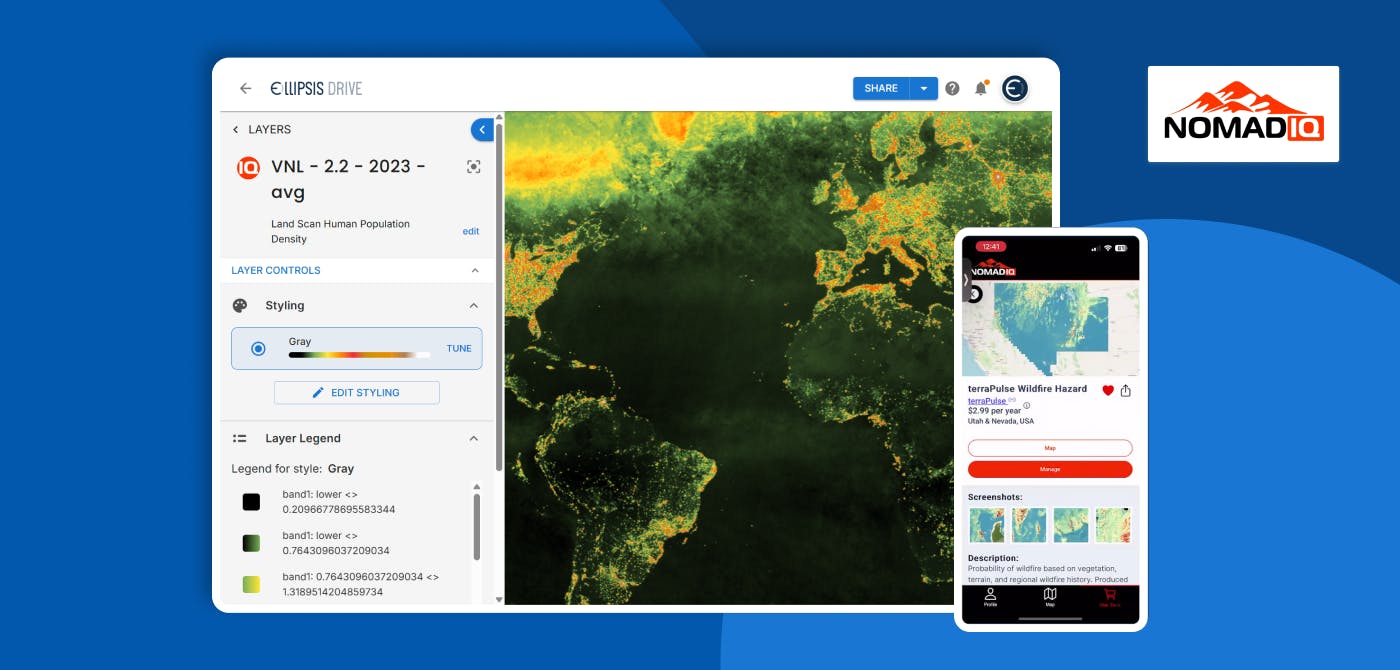
Connecting Earth Observation Datasets to End Users Ft. NomadIQ
“From established basic research and government land management to growing demand in carbon markets, hazard insurance, and even recreational apps, there's a rapidly developing market for satellite-ba
5 min read
A Stable Infrastructure for Radar derived 3D Data Visualization
In the latest episode of The Ellipsis Drive Podcast, our CEO Rosalie van der Maas hosted jC Clark, a professional with over 20 years of experience in Insurance and Earth Observation (EO) entrepreneur
7 min read